


Why is copper a good catalyst
Catalysts are the cornerstone of modern chemical industries, enabling reactions to proceed under milder conditions while improving efficiency and selectivity. Among transition metals, copper stands out as a versatile and economically viable catalyst, with applications spanning energy conversion, environmental remediation, and organic synthesis. Its unique combination of electronic properties, multiple oxidation states, and surface reactivity underpins its widespread adoption. This article explores the fundamental reasons why copper excels as a catalyst, drawing on industrial case studies and cutting-edge research to illustrate its impact.
1.Multiple Oxidation States Enable Diverse Reaction Pathways
Copper’s ability to cycle between Cu(0), Cu(I), and Cu(II) oxidation states is a defining feature that distinguishes it from other metals. This redox flexibility allows copper catalysts to participate in both single-electron and multi-electron transfer processes, critical for reactions like CO oxidation, C-H bond activation, and electrochemical CO₂ reduction. For instance, in methanol synthesis from CO₂ hydrogenation, Cu/ZnO/Al₂O₃ catalysts leverage Cu(I) and Cu(0) species to selectively reduce CO₂ to methanol at temperatures as low as 200–300°C, outperforming traditional iron-based catalysts. Similarly, in the water-gas shift reaction (CO + H₂O → CO₂ + H₂), copper’s dynamic valence changes facilitate the dissociation of water and activation of CO, achieving high hydrogen yields with minimal energy input.
The versatility of copper’s oxidation states also extends to homogeneous catalysis. Phenanthroline-copper complexes, for example, catalyze hydrogen evolution reactions (HER) in neutral conditions with faradaic efficiencies exceeding 95%, thanks to the reversible Cu(II)/Cu(I) redox couple. This adaptability makes copper catalysts indispensable in processes requiring precise control over reaction intermediates.
2.Low Cost and Environmental Sustainability
Unlike precious metals such as palladium or platinum, copper is abundant and inexpensive, with a global reserve base sufficient to meet industrial demand for decades. This cost advantage has driven its adoption in large-scale applications like ammonia synthesis (via the Haber-Bosch process) and nitric acid production (Ostwald process). For example, BASF’s copper-based catalysts for selective hydrogenation of oleochemicals and petrochemicals dominate the market due to their high activity and low operational costs. These catalysts, available in tablet, extrudate, or powder forms, are tailored to specific processes, ensuring optimal performance without compromising profitability.
Moreover, copper’s low toxicity aligns with growing demands for sustainable chemistry. In contrast to chromium or cadmium-based catalysts, copper systems minimize environmental risks during production and disposal, making them preferable for pharmaceutical and food-related applications.
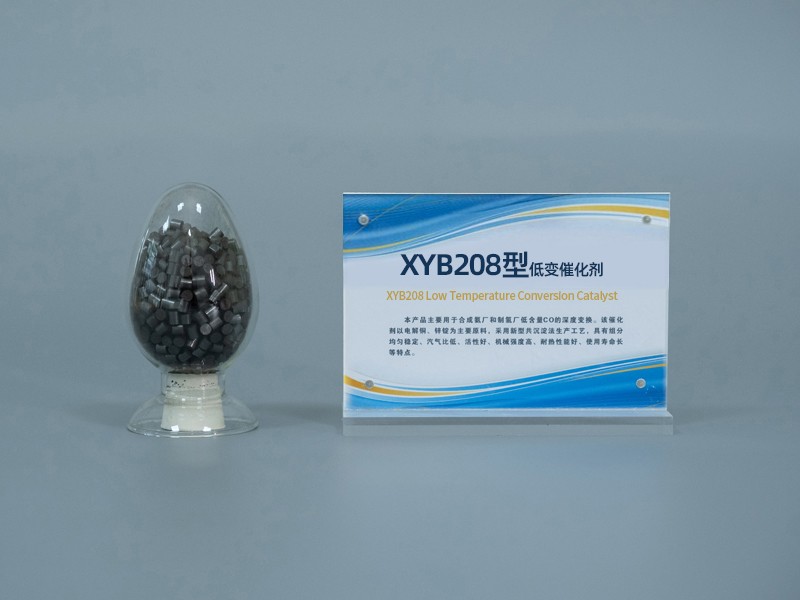
3.Surface Reactivity and Active Site Engineering
Copper’s catalytic prowess is further enhanced by its surface properties, particularly in nanostructured forms. Copper nanoparticles exhibit a higher density of undercoordinated sites (e.g., edges, steps, and defects), which serve as active centers for substrate adsorption and activation. For instance, in electrochemical CO₂ reduction, copper’s unique negative adsorption energy for CO enables efficient C-C coupling, producing multi-carbon products like ethylene and ethanol with faradaic efficiencies up to 70%. This selectivity surpasses that of nickel or gold catalysts, which predominantly yield single-carbon compounds.
Recent atomic-level studies using synchrotron radiation (e.g., at the Advanced Light Source) have revealed how copper’s surface transforms under reactant gases. For example, in methanol synthesis, Cu nanoparticles dynamically restructure to form stable Cu(I)-O species that lower the activation energy for CO₂ dissociation. Such insights have guided the design of Cu/SSZ-13 zeolite catalysts for NOₓ elimination, where confined copper sites resist sulfur poisoning and maintain activity even at low temperatures.
4.Synergy with Support Materials
The performance of copper catalysts often hinges on their interaction with supports like alumina, zirconia, or carbon nanotubes. Supports stabilize copper species, prevent sintering, and introduce acid-base properties that influence reaction pathways. For example, Cu/ZnO/Al₂O₃ catalysts for methanol synthesis achieve high selectivity by dispersing Cu nanoparticles on a ZnO-Al₂O₃ matrix, which facilitates CO₂ adsorption and hydrogen spillover. Similarly, Cu-nanotube composites reduce p-nitrophenol to p-aminophenol 59% faster than non-irradiated samples, demonstrating how support-induced electron transfer enhances catalytic activity.
Conclusion
Copper’s status as a premier catalyst stems from its multifaceted advantages: redox versatility, cost-effectiveness, tunable surface reactivity, and compatibility with diverse support materials. From industrial-scale hydrogen production to precision organic synthesis, copper catalysts consistently deliver high activity, selectivity, and durability under challenging conditions. As research continues to unravel atomic-level mechanisms—such as dynamic valence cycling and active site restructuring—the potential for optimizing copper catalysts grows. By leveraging these insights, chemists and engineers can design next-generation copper-based systems to address global challenges in energy storage, carbon neutrality, and sustainable manufacturing. In an era where efficiency and sustainability are paramount, the copper catalyst remains an indispensable tool, bridging the gap between fundamental science and real-world applications.


