


Low-Temp vs. Medium-High Temp Conversion Catalysts
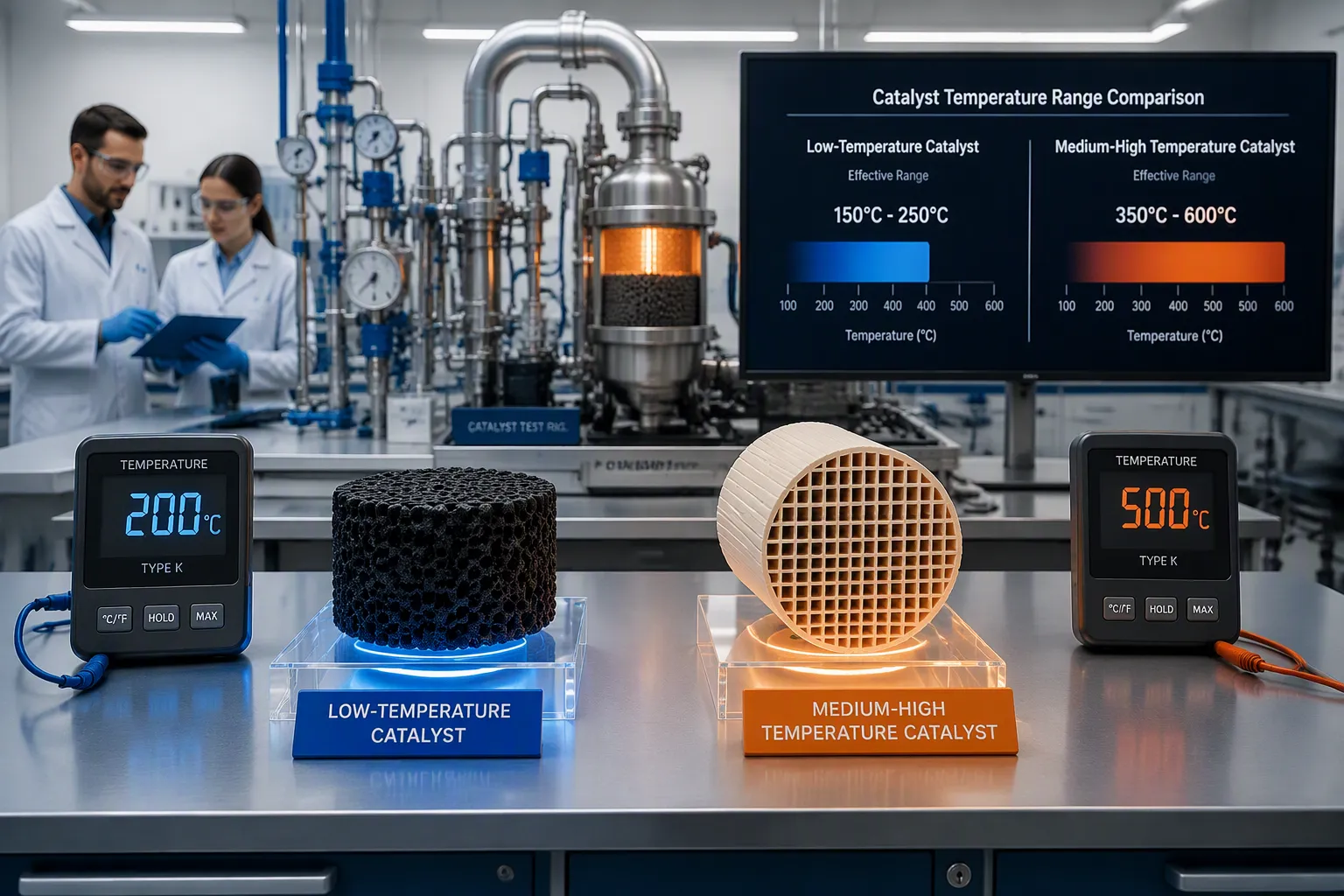
The choice between low-temperature and medium-high temperature conversion catalyst isn't about which is "better," but which is better for your specific syngas production process. Low-temperature catalysts, such as copper-zinc oxide, achieve higher equilibrium CO conversion and energy efficiency. However, they are highly sensitive to sulfur poisons. Medium-high temperature catalysts, like iron-chromium, offer robustness and versatility but require more energy and achieve lower conversion. This article serves as a practical decision-making guide for engineers and plant managers. The right choice depends on your feedstock, downstream requirements, and economic constraints. For clean natural gas feedstocks, maximizing hydrogen yield favors low-temperature options. For sulfur-laden coal or biomass syngas, durability matters more. Understanding these trade-offs helps optimize your production and catalyst selection.
Key Takeaways
Low-temperature catalysts achieve up to 99% CO conversion but require clean feedstocks.
Medium-high temperature catalysts tolerate sulfur up to 3000 ppm, ideal for coal or biomass.
Choose low-temperature for natural gas to maximize hydrogen yield and purity.
Choose medium-high temperature for dirty feedstocks to avoid expensive desulfurization.
Low-temperature operation saves energy but risks poisoning and condensation.
Medium-high temperature operation costs more energy but offers longer lifespan and robustness.
Match catalyst choice to your feedstock, downstream needs, and economic constraints.
Pilot testing with real feedstocks ensures optimal catalyst selection and performance.
Syngas Production Fundamentals
The Role of Catalysts in the Water-Gas Shift Reaction
Defining Syngas and Its Primary Components
Syngas, short for synthesis gas, is a mixture of hydrogen and carbon monoxide. This combination forms the foundation for many industrial processes. A variety of feedstocks can produce this gaseous mixture. Natural gas, coal, and organic matter serve as the most common sources. Each feedstock requires a different manufacturing route. Steam methane reforming uses methane from natural gas to create syngas. Biomass gasification provides a pathway for syngas production from organic material. Autothermal reforming combines partial oxidation with steam reforming. Catalytic partial oxidation is another efficient method. This autothermal reforming approach offers flexibility. Dry methane reforming uses carbon dioxide instead of steam. The resulting gas has a specific hydrogen-to-carbon monoxide ratio. That ratio determines its suitability for downstream applications.
Why the Water-Gas Shift Reaction is Critical
The water-gas shift reaction adjusts the composition of syngas. This reaction converts carbon monoxide and water into hydrogen and carbon dioxide. The reaction is exothermic, meaning it releases heat, and is essential for hydrogen production. It also helps achieve the correct H2/CO ratio for downstream processes. A catalyst accelerates this conversion without being consumed, and the choice of catalyst determines the operating conditions and thermal profile of the process.
The Temperature Spectrum in Catalysis
Defining Low-Temperature and Medium-High Temperature Ranges
The thermal operating range for these catalytic systems spans a wide spectrum. Low-temperature shift units operate between 180°C and 260°C. Medium-temperature shift units work from 250°C to 350°C. High-temperature shift units operate from 350°C to 450°C. Each range offers distinct advantages. The conversion of CO varies with the operating range.
Catalyst Type | Typical Temperature Range |
|---|---|
High-Temperature Shift (HTS) | 350°C – 450°C |
Medium-Temperature Shift (MTS) | 250°C – 350°C |
Low-Temperature Shift (LTS) | 180°C – 260°C |
How Temperature Impacts Thermodynamics and Kinetics
Temperature affects both the thermodynamics and kinetics of this conversion. Since the thermal reaction is exothermic, lower thermal conditions favor product formation. The equilibrium constant decreases as thermal energy rises. This means the equilibrium conversion of CO is higher under cooler conditions. Hotter conditions accelerate the kinetic rate but reduce the final CO level. The unit must be active enough to achieve practical rates at its operating range.
Low-Temperature Conversion Catalyst Profile
Key Characteristics and Composition
Typical Materials (e.g., Copper-Zinc-Aluminum)
The low-temperature conversion catalyst relies on a copper-zinc-aluminum formulation. Alumina serves as a structural support to prevent the sintering of copper microcrystals. Manufacturers utilize advanced co-precipitation technologies to ensure uniform dispersion of active components. The resulting catalyst tablets exhibit high mechanical strength and low bulk density, optimizing gas flow through the reactor bed. This composition supports exceptional catalytic activity at lower thermal thresholds.
Operating Conditions and Windows
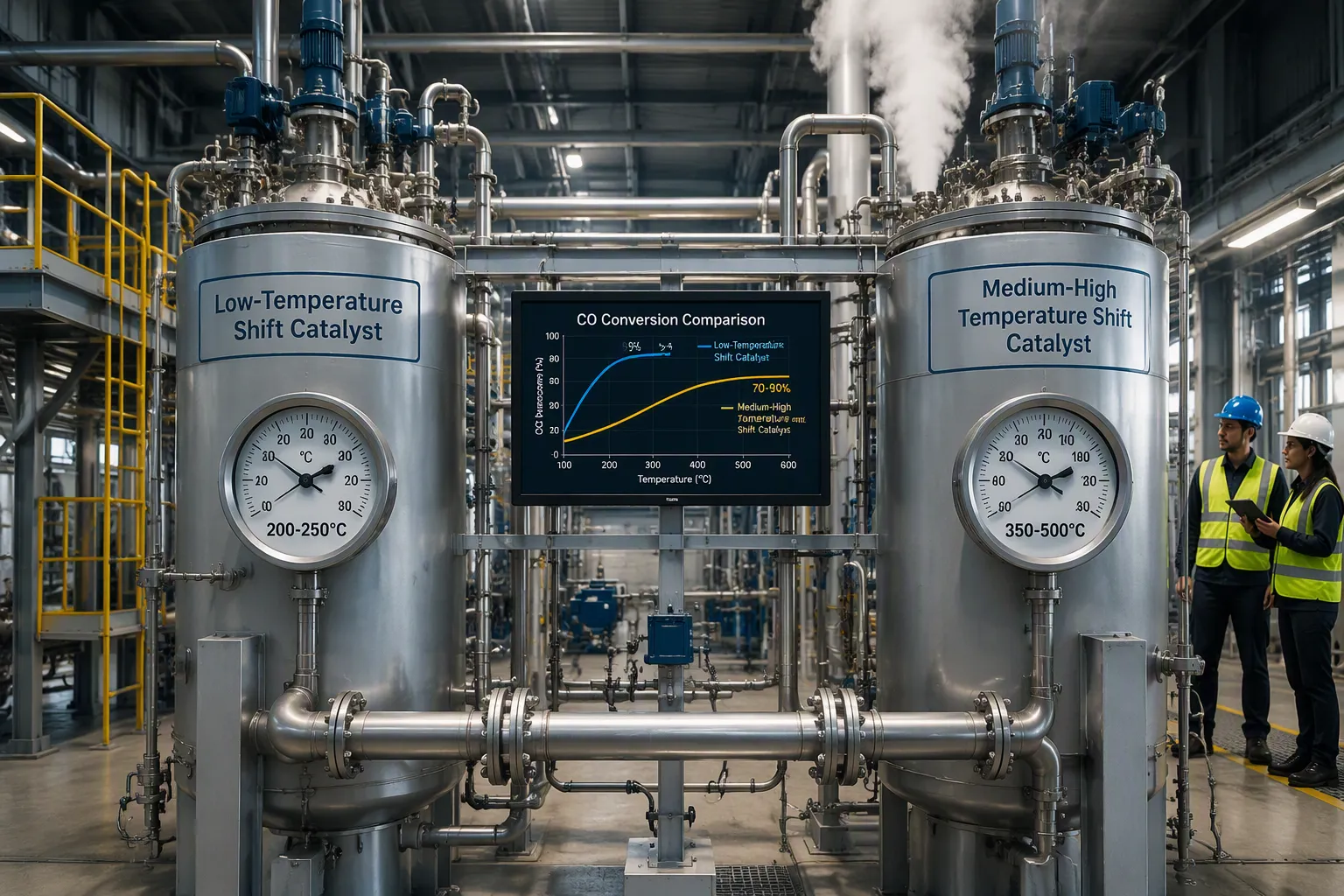
This conversion catalyst operates within a defined thermal range, typically spanning from 180°C to 260°C. The catalyst maintains high activity at these levels with excellent thermal resistance. The reaction occurs at a steady rate within this window, but the process must strictly avoid the condensation of steam, as water droplets can damage the physical structure and dissolve active components.
Key Advantages
High CO Conversion and Hydrogen Purity
The low-temperature catalyst achieves high conversion of carbon monoxide, maximizing yield. The product stream contains very low residual CO. This feature supports applications that need high purity hydrogen. Ammonia synthesis requires extremely clean gas. The two-stage configuration places the low-temperature unit second. The high-temperature unit performs the bulk work first. The low-temperature unit polishes the gas to a very low CO level. The final hydrogen-rich syngas meets strict purity specifications. This setup maximizes overall hydrogen production efficiency.
Energy Efficiency and Lower Operating Costs
Lower temperature reduces energy consumption. The exothermic reaction releases heat that can be recovered. The system requires less external heating. This efficiency translates into lower operational costs. The catalyst uses the available heat effectively for hydrogen production. The plant can achieve better thermal integration. The overall production process becomes more economical. The lower energy demand reduces the carbon footprint. For methane-based feedstock, this advantage is significant. The syngas for this application benefits from these cost savings. The yield of clean gas improves with this approach.
Key Disadvantages
Sensitivity to Sulfur and Other Poisons
The copper-based unit is highly sensitive to sulfur compounds. Even trace amounts of sulfur can cause rapid deactivation. The plant must install rigorous desulfurization equipment upstream, such as a high-capacity Zinc Oxide Desulfurizer. This requirement adds capital cost. The unit also suffers from chlorine poisoning. Halides and other impurities can degrade performance. The feedstock must be very clean. The syngas from natural gas is relatively pure. For methane reforming, the gas meets this requirement. The water-gas shift reaction depends on clean conditions. For coal or biomass, the cost of cleaning becomes high. The operation depends on feedstock quality. Reduced yield can result from catalyst poisoning.
Risk of Condensation and Deactivation
The low operating temperature creates a condensation risk. Steam can condense inside the reactor. Water droplets can wash away active components. This condition leads to permanent deactivation. The unit must be protected from liquid water. The plant must maintain proper temperature control. Startup and shutdown procedures require careful attention. The unit can also suffer from thermal sintering. Prolonged exposure to high temperatures reduces the active surface area. The activity drops as a result. Proper management ensures a long service life. The hydrogen content can drop with deactivation.
Medium-High Temperature Conversion Catalyst Profile
Key Characteristics and Composition
Typical Materials (e.g., Iron-Chromium, Cobalt-Molybdenum)
The medium-high temperature conversion catalyst family relies primarily on iron-chromium formulations. These materials dominate high-temperature shift service. The active composition contains 74-89% Fe2O3 and 6-14% Cr2O3. The iron oxide provides the primary catalytic activity. The chromium oxide acts as a structural stabilizer. It prevents sintering of the iron crystals during operation. This stabilization extends the operational lifespan considerably. Cobalt-molybdenum formulations serve as an alternative. These materials offer sulfur resistance in specific applications. However, iron-chromium remains the industry standard for most syngas production scenarios.
Attribute | Value |
|---|---|
Composition | 74-89% Fe2O3, 6-14% Cr2O3 |
Operating Temperature Range | 350-450 °C |
Operating Conditions and Windows
These catalysts operate within a well-defined thermal envelope. The standard operating range spans 350-450°C. This window sits substantially higher than the low-temperature alternative. The elevated thermal conditions accelerate the reaction kinetics. The catalyst achieves practical conversion rates despite thermodynamic limitations. The unit requires careful steam-to-gas ratio management. Excess steam drives the equilibrium toward hydrogen production. The operating pressure varies with the upstream process design. The catalyst bed must maintain uniform temperature distribution. Hot spots can accelerate deactivation. Proper gas distribution ensures consistent performance across the entire bed.
Key Advantages
Robustness and Tolerance to Sulfur Impurities
The iron-chromium catalyst demonstrates exceptional tolerance to sulfur compounds. It can handle feed gas with H2S concentrations up to 3000 ppm without significant deactivation. This tolerance transforms the economics of syngas production. Coal-derived and biomass-derived syngas contain substantial sulfur impurities. Deep desulfurization adds significant capital and operating costs. The medium-high temperature catalyst eliminates this requirement. The plant can process raw feed gas directly. This capability proves especially valuable for biomass gasification operations. The biomass feedstock often carries variable sulfur content. The catalyst absorbs these fluctuations without performance loss. Copper-based low-temperature catalysts suffer rapid poisoning under these conditions. The iron-chromium system maintains stable operation throughout.
Versatility Across Different Feedstocks
This catalyst family accommodates a wide range of feedstocks. Natural gas reforming produces relatively clean syngas. Coal gasification generates sulfur-laden product streams. Biomass gasification produces variable gas compositions. The iron-chromium catalyst handles all these sources effectively. The water-gas shift reaction proceeds reliably regardless of feedstock origin. This versatility simplifies plant design. Operators can switch between feedstocks without changing the shift section. The catalyst also tolerates process upsets better than low-temperature alternatives. Temperature excursions and pressure fluctuations cause minimal damage. This robustness reduces downtime and maintenance requirements. The longer operational life compensates for the lower per-pass conversion.
Key Disadvantages
Lower Equilibrium CO Conversion
The medium-high temperature catalyst achieves lower equilibrium conversion than its low-temperature counterpart. The exothermic water-gas shift reaction favors product formation at cooler conditions. At 350-450°C, the equilibrium constant limits the final CO concentration. Typical single-pass conversion is lower than that of low-temperature catalysts, leaving more residual CO in the product stream. Downstream processes may require additional purification steps. Ammonia synthesis demands extremely low CO levels. A single medium-high temperature stage cannot meet this specification. Plants often add a low-temperature polishing stage downstream. This two-stage configuration adds complexity and cost. The hydrogen yield per pass remains lower than the theoretical maximum.
Higher Energy Demand and Operational Costs
Operating at elevated temperatures requires substantial energy input. The feed gas must be heated to the reaction temperature. This heating consumes significant fuel or steam. The exothermic reaction releases heat, but the net energy balance remains less favorable than low-temperature operation. The higher thermal level also demands more robust reactor materials. The equipment must withstand continuous operation at 350-450°C. This requirement increases capital costs. The combination of higher energy consumption and equipment costs raises the overall operational expenditure. However, the reduced desulfurization requirements partially offset these expenses. The economic comparison depends on the specific feedstock and plant configuration.
Comparative Analysis of Conversion Catalysts
Performance and Efficiency Metrics
CO Conversion Rates and Selectivity
The performance gap between catalyst families becomes clear when examining conversion rates. Low-temperature shift catalysts achieve high conversion of carbon monoxide, producing a hydrogen-rich syngas stream with minimal residual CO. Medium-high temperature catalysts typically reach lower conversion per pass, leaving more residual CO. The equilibrium constant of the water-gas shift reaction explains this difference. Lower temperatures favor product formation thermodynamically. Higher temperatures accelerate kinetics but limit the final conversion ceiling. Selectivity follows a similar pattern. Both catalyst types convert CO and steam into hydrogen and carbon dioxide with high selectivity. Side reactions remain minimal in either case. The practical distinction lies in the residual CO concentration. A plant producing ammonia requires extremely low CO levels. The low-temperature option delivers this purity directly. A medium-high temperature unit alone cannot meet such specifications. Many facilities combine both types in a two-stage configuration. The high-temperature unit handles the bulk conversion. The low-temperature unit polishes the gas to the final specification.
Energy Consumption and Heat Recovery
Energy efficiency differs substantially between the two approaches. The exothermic water-gas shift reaction releases heat regardless of catalyst choice. The temperature level of that released heat matters for recovery. High-temperature shift reactors operate at 350-450°C. This elevated thermal level produces high-grade heat. Plant designers can recover this heat to generate steam. That steam drives turbines or supports other process heating needs. The energy conversion from reaction heat becomes practical and valuable. Low-temperature shift reactors operate at 180-260°C. The heat released at this level has lower quality. Recovery options remain limited. The plant must actively cool the reactor to maintain operating conditions. This cooling requirement consumes additional energy. However, the low-temperature catalyst achieves higher conversion per pass. The overall hydrogen production efficiency can still favor the low-temperature route. The trade-off involves heat quality versus conversion completeness. A natural gas-based plant with clean feedstock often chooses the low-temperature option. The higher conversion reduces downstream purification costs. A coal-based facility may prefer the high-temperature route. The recoverable steam offsets some of the lower conversion penalty.
Cost Analysis: Capital and Operational Expenditures
Initial Catalyst Cost and Reactor Design
Capital costs diverge significantly between the two catalyst families. The reactor design differs. Low-temperature operation allows simpler materials of construction. Standard carbon steel suffices at 180-260°C. Medium-high temperature operation requires more robust metallurgy. The reactor must withstand continuous service at 350-450°C. This requirement increases equipment costs. The feedstock cleaning system adds another capital dimension. Low-temperature catalysts demand rigorous upstream desulfurization. A complete desulfurization unit represents substantial investment. Medium-high temperature catalysts tolerate sulfur up to 3000 ppm. The plant can eliminate or minimize desulfurization equipment. The total capital picture depends on feedstock. Clean natural gas requires minimal cleaning regardless of catalyst choice. Dirty coal-derived syngas demands either extensive cleaning or a tolerant catalyst.
Long-Term Costs (Energy, Maintenance, Replacement)
Operational expenditures follow a different pattern. Low-temperature operation consumes less energy for heating. The catalyst achieves higher conversion, reducing downstream processing costs. However, the catalyst remains vulnerable to poisoning. Any sulfur breakthrough causes rapid deactivation. Replacement costs recur more frequently if upstream cleaning fails. Medium-high temperature operation requires more energy input. The feed gas must be heated to the reaction temperature. The higher thermal level also accelerates catalyst aging mechanisms. Sintering gradually reduces active surface area. Yet the iron-chromium catalyst tolerates process upsets better. Temperature excursions cause minimal damage. The operational lifespan often extends several years. The maintenance schedule becomes more predictable. Plant operators must weigh these factors against their specific feedstock and reliability requirements.
Lifespan and Durability
Expected Catalyst Lifetime and Deactivation Rates
Catalyst lifetime varies with operating conditions and feedstock quality. A well-protected low-temperature catalyst can serve several years in clean service. The primary deactivation mechanism involves thermal sintering. Prolonged exposure to high temperatures causes copper crystallites to grow. This growth reduces active surface area and activity. Proper temperature control extends the service life considerably. Medium-high temperature catalysts typically last several years or longer. The iron-chromium formulation resists sintering effectively. Chromium oxide stabilizes the iron crystals against thermal growth. The catalyst maintains activity through repeated startup and shutdown cycles. This durability reduces replacement frequency. The longer lifespan partially offsets the higher initial cost. Plant operators value this reliability for continuous production processes.
Tolerance to Poisons and Process Upsets
Poison tolerance represents the clearest differentiator between the two families. Copper-based catalysts suffer rapid deactivation from sulfur compounds. Even trace amounts cause permanent damage. Chlorine and halides also poison the active sites. The plant must maintain strict feed gas purity. Any breakthrough event requires immediate shutdown and catalyst replacement. Iron-chromium catalysts tolerate sulfur concentrations up to 3000 ppm. This tolerance transforms operational flexibility. The plant can process variable feedstock without constant monitoring. Process upsets also affect the two families differently. A temperature spike permanently damages copper-based catalysts. The same excursion causes minimal harm to iron-chromium formulations. The robust catalyst recovers normal operation once conditions stabilize. This resilience reduces downtime and protects production schedules. For facilities processing variable feedstocks, this durability often outweighs the conversion disadvantage.
Selecting the Right Conversion Catalyst for Syngas Production
Feedstock Analysis and Pre-Treatment Capabilities
Matching Catalyst Tolerance to Feedstock Impurities
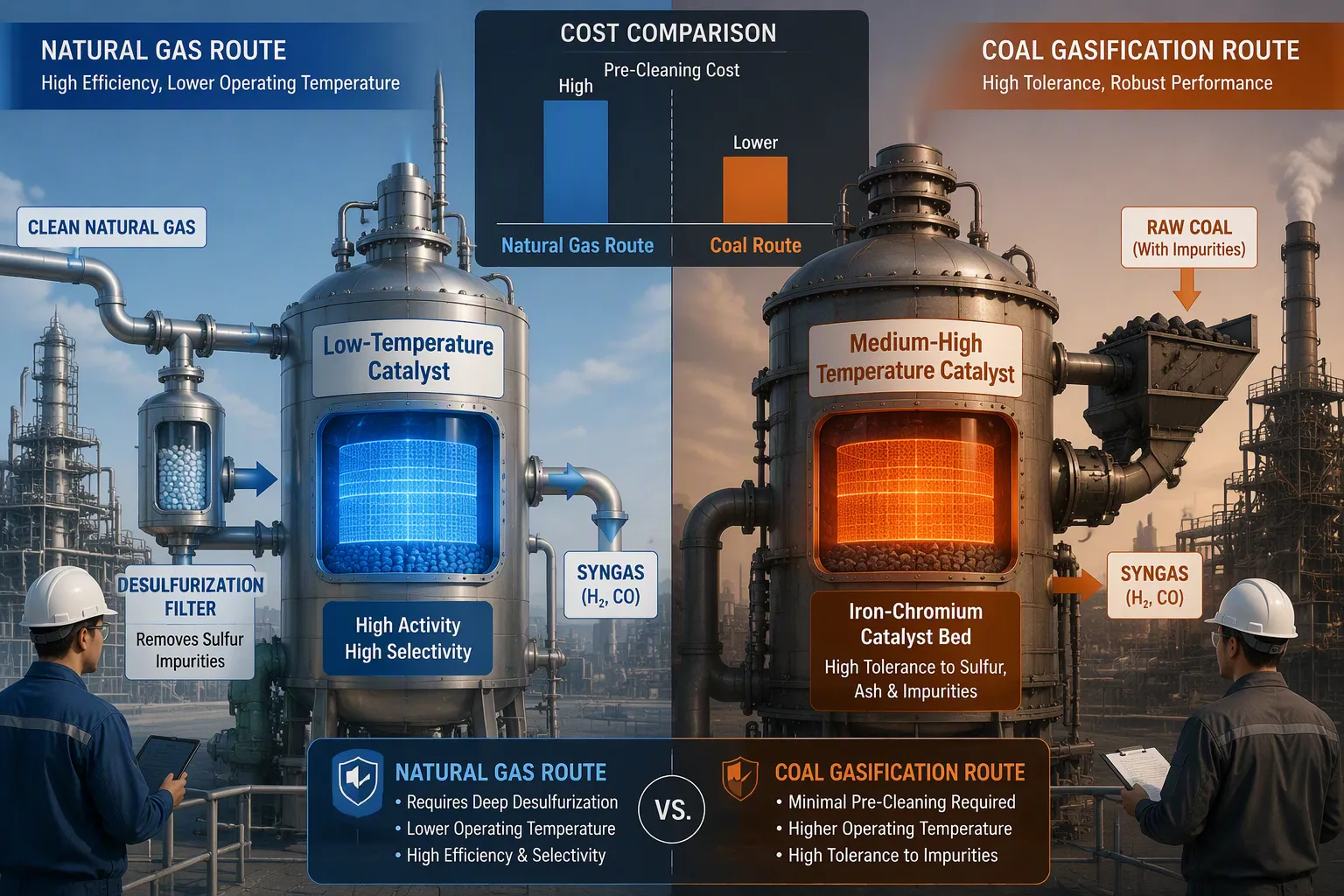
The choice of catalyst depends heavily on the source of syngas. A clean feedstock, such as natural gas, supports the use of a low-temperature catalyst. This type of catalyst achieves high conversion of carbon monoxide. It also produces a high yield of hydrogen. However, the low-temperature catalyst cannot tolerate sulfur. Any sulfur in the feed causes rapid deactivation. A medium-high temperature catalyst, by contrast, tolerates sulfur levels up to 3000 ppm. This tolerance makes it ideal for syngas derived from coal or biomass. The reaction proceeds reliably even with variable impurity levels. The supplier must match the catalyst tolerance to the actual feedstock composition. For example, a plant using coal gasification benefits from an iron-chromium catalyst. This robust catalyst handles the sulfur and other poisons without issue. The process of gasification produces a gas with many contaminants. The right catalyst turns this challenge into a manageable operation.
Evaluating the Cost of Feedstock Pre-Cleaning
The cost of cleaning the feedstock before the shift reactor can be substantial. A low-temperature catalyst requires deep desulfurization. Utilizing an efficient Zinc Oxide Desulfurizer adds significant capital and operating expenses. The table below shows the typical cost comparison for different feedstock scenarios.
Feedstock Type | Pre-Cleaning Required for Low-Temperature Catalyst | Relative Cost Impact |
|---|---|---|
Natural gas | Minimal (polishing only) | Low |
Coal gasification | Extensive desulfurization | High |
Biomass gasification | Moderate to extensive | Medium to high |
A medium-high temperature catalyst eliminates the need for expensive pre-cleaning. This cost saving can offset the lower energy efficiency of the high-temperature operation. For a plant using biomass feedstock, the saving is especially important. The biomass gasification route often carries variable sulfur content. A tolerant catalyst makes the process more economical. The overall production cost becomes more predictable.
Desired Output and Downstream Process Integration
Hydrogen-to-Carbon Monoxide Ratio Requirements
Different downstream processes require different ratios of hydrogen to carbon monoxide. Ammonia synthesis needs a high hydrogen content. The water-gas shift reaction increases this ratio by converting CO into hydrogen. A low-temperature catalyst achieves high conversion. This high conversion produces a syngas stream with very low CO. The hydrogen yield is maximized. For methanol synthesis, the required ratio is specific. The process needs a particular balance. The temperature and catalyst choice affect the final ratio. The system must be designed to hit the target ratio. The reaction kinetics play a role in achieving the right balance.
Integration with Ammonia, Methanol, or Fischer-Tropsch Synthesis
The integration of the shift reactor with the downstream unit is critical. An ammonia plant requires extremely pure hydrogen. A two-stage configuration works well. The first stage uses a medium-high temperature catalyst. The second stage uses a low-temperature catalyst to polish the gas. The final product meets the strict specification. For a methanol plant, the ratio of hydrogen to carbon monoxide must meet the process requirements. The temperature and catalyst choice affect the final ratio. The system must be designed to hit the target ratio. For Fischer-Tropsch synthesis, the ratio varies. Some processes need a specific ratio. In that case, a high-temperature catalyst may be preferred. The design of the syngas production system must account for these requirements. The choice of catalyst directly influences the ability to meet the downstream needs.
Economic and Operational Constraints
Balancing Energy Costs vs. Catalyst Replacement Costs
The operating temperature affects energy consumption. A low-temperature catalyst operates at 180°C to 260°C. This lower temperature reduces the energy needed for heating the feed gas. The reaction releases heat that can be recovered. The net energy efficiency is high. However, the catalyst is sensitive to poisons. Any sulfur breakthrough forces a costly replacement. The replacement cost and downtime add to the operational expense. A medium-high temperature catalyst operates at 350°C to 450°C. This higher temperature requires more energy input. But the catalyst lasts longer and tolerates impurities. The total cost of ownership depends on the feedstock. A clean natural gas feed favors the low-temperature route. A dirty coal or biomass feed favors the robust high-temperature option. The production yield also matters. A higher conversion reduces the need for additional purification steps. The balance between energy cost and catalyst replacement cost must be evaluated for each plant.
Considering Plant Uptime and Maintenance Schedules
Plant uptime is a key factor. A low-temperature catalyst can be very reliable if the feed is clean. The risk of poisoning is low. The maintenance schedule is predictable. The catalyst can last several years. A medium-high temperature catalyst offers even longer life. It can last several years. It also handles process upsets better. A temperature excursion does not cause permanent damage. This resilience reduces unplanned downtime. The plant can operate with higher confidence. The maintenance schedule becomes simpler. The overall process reliability improves. The final product quality is more consistent. The choice of catalyst affects the entire plant operation.
Key Decision Framework: If the feedstock is clean and the goal is maximum hydrogen purity, a low-temperature catalyst is optimal. If the feedstock is dirty and sulfur removal is impractical, a medium-high temperature catalyst is preferred.
Catalyst manufacturers offer tailored formulations. Their copper-based low-temperature catalysts and iron-based high-temperature catalysts are designed for specific operating conditions. These formulations feature high thermal resistance and post-reduction stability. The supplier can help match the catalyst to the precise needs of the plant. Pilot testing remains essential. Real-world conditions can differ from theoretical calculations. A pilot test validates the performance under actual operating conditions. Consulting with the catalyst supplier ensures the best choice. The right selection leads to higher efficiency, better yield, and lower overall cost.
Typical Application Scenarios
Scenario 1: Natural Gas-Based Syngas Plant
Why Low-Temperature Catalyst Was the Optimal Choice
A large ammonia production facility uses natural gas as its feedstock. The plant operates steam methane reforming to produce syngas. The primary goal is maximum hydrogen yield for ammonia synthesis. The downstream requirements call for a very low CO concentration. The low-temperature catalyst meets this specification. The clean natural gas feedstock contains no sulfur contamination. The unit operates at 180-260°C. This temperature range allows high CO removal. The reaction thermodynamics favor product formation at these cooler conditions. The plant uses a two-stage shift configuration. The first stage uses a high-temperature formulation for bulk conversion. The second stage polishes the gas to the final specification.
Documented Performance and Efficiency Gains
The plant reports a very high CO conversion rate. The hydrogen purity meets the strict ammonia synthesis specification. The energy efficiency is high because the reactor operates at lower temperatures. The unit has a service life of several years. The plant saves on energy costs compared to a single high-temperature design. The overall production cost is lower. The plant achieves consistent output and reliable operation. The methane reforming unit operates with high efficiency. The natural gas consumption is optimized for hydrogen production.
Scenario 2: Coal-to-Liquids Facility
Why Medium-High Temperature Catalyst Was Preferred
A coal-to-liquids plant uses Fischer-Tropsch synthesis. The feedstock is coal-derived syngas. This syngas contains sulfur compounds up to 3000 ppm. Deep desulfurization would be expensive. The plant chose an iron-chromium formulation. This formulation tolerates sulfur without deactivation. It operates at 350-450°C. The reaction kinetics are fast at these temperatures. The plant avoids the cost of extensive gas cleaning. The same catalyst type also works for biomass gasification applications. This versatility is a key advantage. For plants using biomass gasification, the catalyst provides similar benefits. The biomass gasification process produces syngas with variable sulfur content. The performance remains stable over time.
Overcoming Feedstock Challenges and Ensuring Reliability
The iron-chromium formulation provides robust performance over a multi-year lifespan. The plant runs continuously without frequent changes. The formulation resists poisoning from sulfur and other impurities. Operational upsets do not cause permanent damage. The plant achieves reliable syngas production. The yield of the Fischer-Tropsch synthesis remains stable. The overall efficiency is acceptable despite the lower per-pass conversion. The plant saves on maintenance costs. The replacement schedule is predictable. The hydrogen yield from the shift reaction is consistent. The production process benefits from this reliability.
The choice between low-temperature and medium-high temperature catalysts depends on your syngas production process. Understanding gas composition is essential for efficient syngas production. These types offer superior efficiency and conversion but require clean feedstocks. They provide robustness at higher energy cost.
Analyze your feedstock and process constraints first. For clean natural gas maximizing hydrogen yield, the first type works best. For impure feedstocks needing durability, choose the second type.
Consult suppliers and conduct pilot tests. Testing with actual impurities reveals deactivation mechanisms and optimizes reaction outcomes. This ensures sustainable hydrogen production and efficient syngas use. The shift reaction performance depends on matching the catalyst to real-world conditions. Achieving high hydrogen yield requires careful selection of production parameters.
FAQ
What is the main difference between low-temperature and medium-high temperature shift catalysts?
The primary difference lies in operating conditions and tolerance. Low-temperature catalysts operate at 180-260°C and achieve high CO conversion. Medium-high temperature catalysts run at 350-450°C, reach lower conversion, but tolerate sulfur up to 3000 ppm. Your feedstock quality determines which option works best.
How does sulfur content affect catalyst selection?
Sulfur poisons copper-based low-temperature catalysts rapidly. Even trace amounts cause permanent damage. Iron-chromium formulations handle sulfur concentrations up to 3000 ppm without issue. Coal-derived syngas and biomass gasification outputs contain significant sulfur. These feedstocks demand the robust medium-high temperature option.
Can I use a low-temperature catalyst with coal or biomass feedstock?
Technically possible, but economically impractical. Coal and biomass gasification produce syngas with substantial sulfur impurities. Deep desulfurization before the shift reactor adds significant capital and operating costs. The medium-high temperature catalyst eliminates this expensive pre-treatment step. Most facilities processing these feedstocks choose the tolerant option.
What conversion rates can I expect from each catalyst type?
Low-temperature catalysts achieve high CO conversion. This high rate maximizes hydrogen yield and produces very clean syngas. Medium-high temperature catalysts reach lower conversion per pass. The lower equilibrium conversion leaves more residual CO. Plants requiring high purity hydrogen often add a low-temperature polishing stage downstream.
How does operating temperature affect energy costs?
Low-temperature operation at 180-260°C requires less heating energy. The exothermic reaction releases heat that can be recovered. Medium-high temperature operation at 350-450°C demands more energy input. However, high-temperature reactors produce higher-grade heat for steam generation. This recovered steam can offset some energy costs. The net balance depends on your plant configuration.
Which catalyst offers a longer operational lifespan?
Medium-high temperature catalysts typically last several years. The iron-chromium formulation resists sintering and tolerates process upsets. Low-temperature catalysts serve several years in clean service. Their copper active sites degrade faster under thermal stress. Proper temperature control extends the lifespan of both types. Feedstock quality remains the dominant factor.
How do I decide between the two catalyst families?
Start by analyzing your feedstock composition. Clean natural gas supports the low-temperature option for maximum hydrogen yield. Sulfur-laden coal or biomass gasification outputs favor the robust medium-high temperature catalyst. Consider your downstream requirements and energy costs. Consult with catalyst suppliers and conduct pilot tests before committing.


