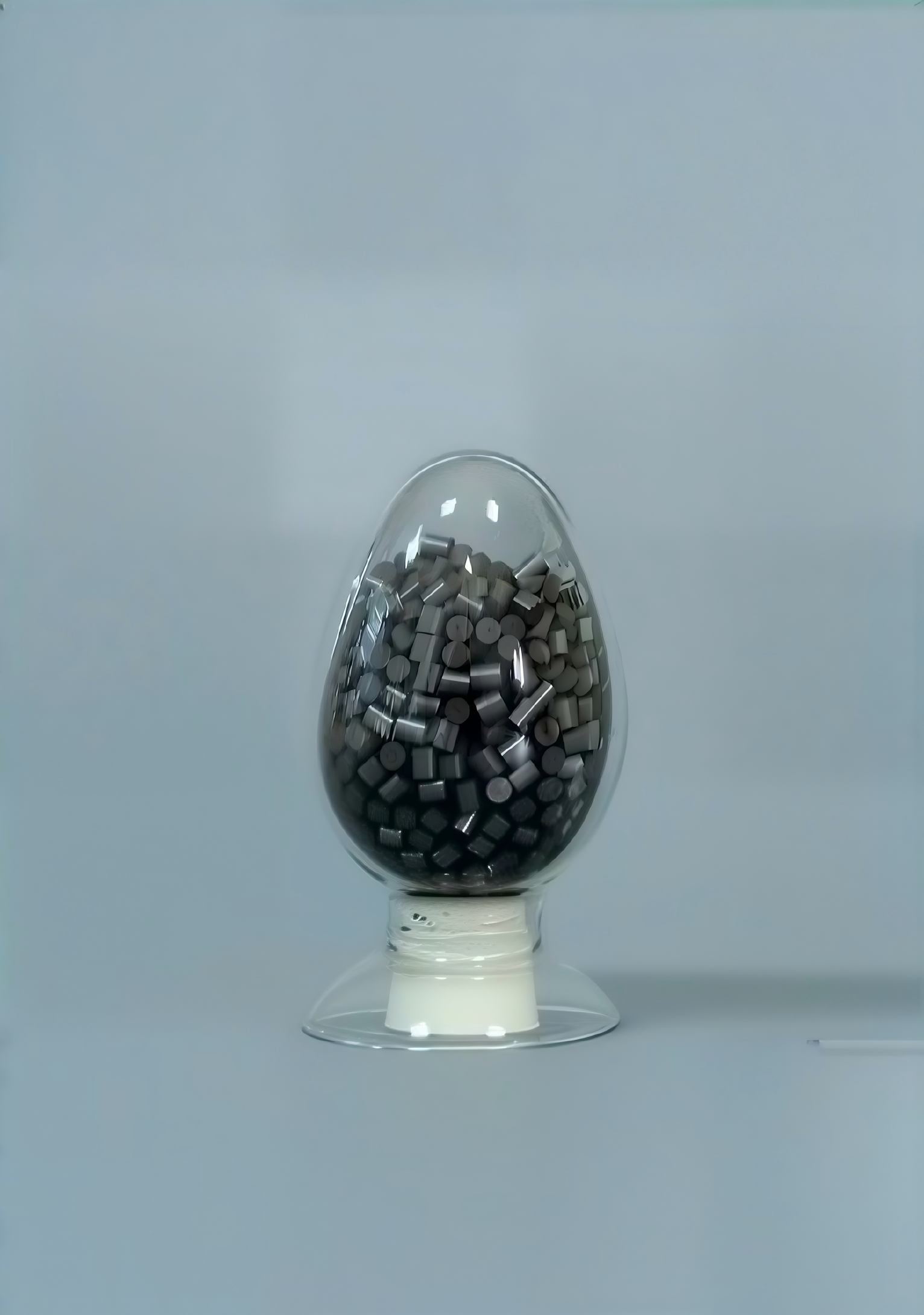
Prevent Catalyst Poisoning in Syngas: Zinc Oxide Desulfurizers
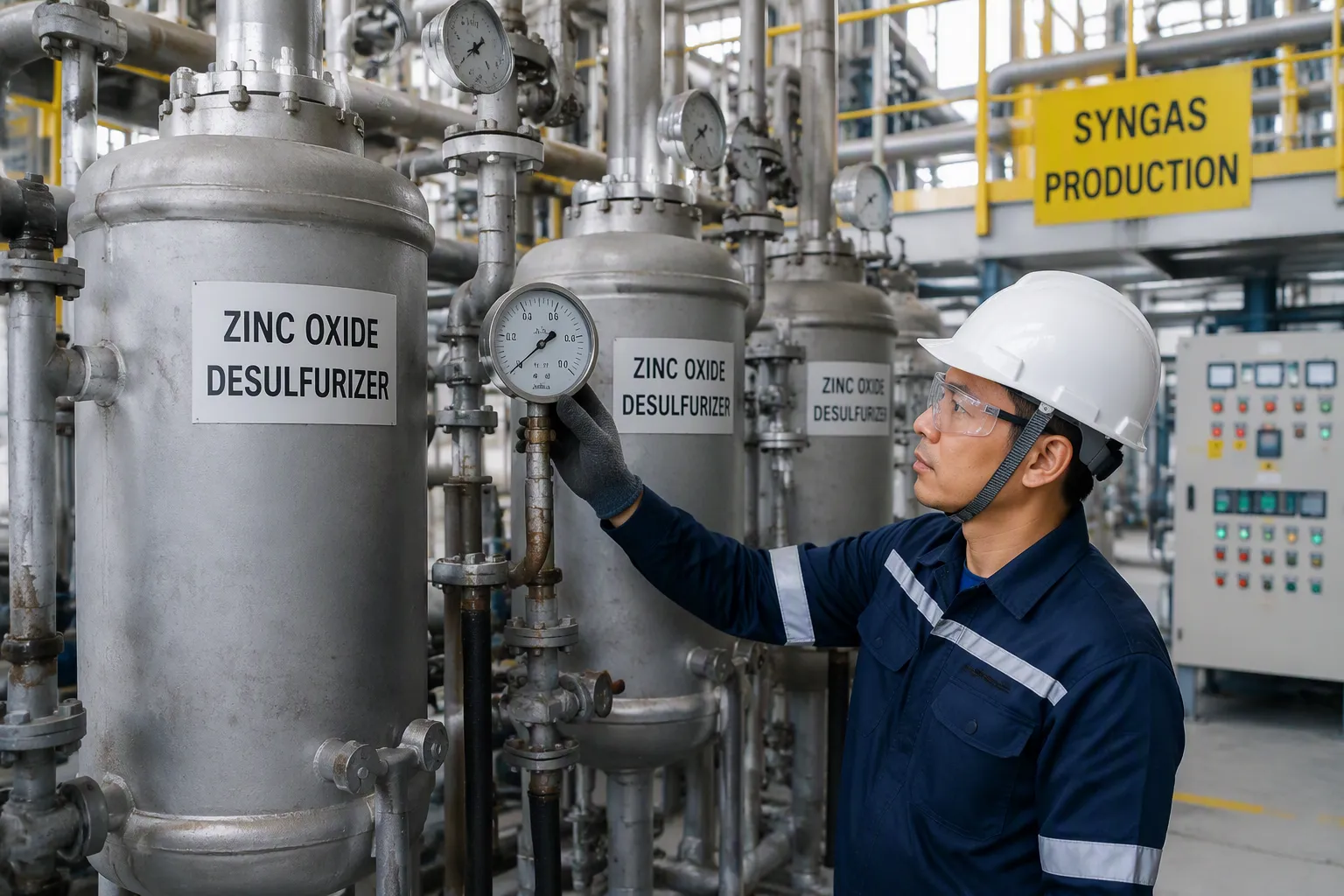
Unplanned shutdowns due to sulfur poisoning cost syngas plants millions in lost production and catalyst replacement. Sulfur slip destroys downstream catalysts, lowers syngas yield, and forces costly interventions. A zinc oxide desulfurizer acts as a critical guard bed. It captures H2S and other sulfur species before they reach sensitive catalysts. Effective desulfurization depends on three pillars: correct desulfurizer selection, optimized operating conditions, and disciplined monitoring and maintenance. Each pillar protects hydrogen production and syngas quality. H2S removal must be complete. H2S breakthrough signals bed exhaustion. H2S levels require continuous attention. H2S control is non-negotiable. The following sections provide actionable steps to implement each pillar effectively.
Key Takeaways
Zinc oxide desulfurizers capture hydrogen sulfide before sulfur poisons downstream catalysts.
Maintain bed temperature between 300–400°C for optimal hydrogen sulfide removal.
Use online analyzers to monitor sulfur breakthrough and set alarm thresholds below 0.1 ppmv.
A lead-lag bed arrangement provides continuous desulfurization and extends overall bed life.
Prevent premature sulfur breakthrough by checking for channeling, bypass, and moisture ingress.
Control feed gas composition and pretreat to remove chlorides and organic sulfur.
Data logging of sulfur load and bed life guides maintenance and improves operating windows.
Role of Zinc Oxide Desulfurizers
How Sulfur Poisons Catalysts
Common sulfur species in syngas
Raw syngas carries several sulfur compounds. Hydrogen sulfide (H2S) dominates. Carbonyl sulfide, mercaptans, and disulfides also appear. These species originate from coal, crude oil, and natural gas feedstocks. Each one threatens downstream catalysts. H2S reacts fastest and causes the most damage. Organic sulfur species convert to H2S under reforming conditions. This conversion releases a continuous poison stream. Desulfurization must therefore target every sulfur form, not just H2S alone.
Mechanism of catalyst deactivation
Sulfur poisons catalysts through strong chemical bonding. The effect is often permanent. Copper-based methanol synthesis catalysts illustrate this clearly.
H2S at concentrations as low as 1 ppm forms Cu-S bonds with the Cu0 surface, irreversibly blocking methanol adsorption and causing permanent catalyst poisoning.
Nickel reforming catalysts behave similarly. Sulfur occupies active sites and blocks reactant adsorption. Catalyst activity falls. Syngas yield drops. Operators face unplanned shutdowns and expensive catalyst replacement. Prevention through desulfurization costs far less than cure.
Why Zinc Oxide Desulfurizers Work
High equilibrium constant for H2S adsorption
Zinc oxide desulfurizers capture H2S through a favorable chemical reaction. ZnO reacts with H2S to form zinc sulfide and water. The equilibrium constant for this reaction is high. The reaction therefore proceeds nearly to completion. A zinc oxide desulfurizer reduces H2S to less than 0.1 ppmv. This level is more than sufficient to protect downstream catalysts. Target sulfur levels in natural gas must be reduced to 0.05–0.4 ppm to prevent catalyst poisoning. ZnO-based desulfurization meets these targets reliably. Sulfur removal performance stays stable across the bed life.
Operability across temperature and pressure ranges
ZnO operates effectively across broad conditions. Temperature ranges from roughly 300–400°C suit most applications. Pressure has little negative effect on adsorption equilibrium. Higher pressure actually favors H2S capture. Space velocity determines contact time. Lower space velocity improves H2S uptake. These flexible operating windows make ZnO suitable for hydrogen production, methanol synthesis, and ammonia plants. A zinc-oxide guard bed removes the last traces of sulfur before methanol synthesis. In ICI and Lurgi processes, this protection contributes to a reported catalyst life of 3–5 years. The guard bed is a critical factor in achieving these extended lifetimes.
Desulfurizer Placement in the Syngas Train
Upstream of reforming or gasification catalyst
Placement matters as much as chemistry. The ZnO bed sits upstream of the reforming or gasification catalyst. This position intercepts H2S before it reaches sensitive active sites. The bed acts as a final guard polishing step. It protects reforming, shift, and methanation catalysts. Every sulfur molecule captured here prevents one potential poisoning event downstream.
Integration with hydrodesulfurization and chloride guard beds
ZnO rarely works alone. Hydrodesulfurization converts organic sulfur into H2S first. The ZnO bed then captures the resulting H2S. Chloride guard beds often follow or precede the ZnO stage. Chlorides poison ZnO and reduce its capacity. Proper sequencing protects both beds. This layered configuration delivers consistent desulfurization performance. It also extends the life of every catalyst in the syngas train.
Measurable benefits of this guard-bed strategy include:
Protection against catalyst poisoning directly extends downstream catalyst life.
Prevention of sulfur slip maintains catalyst activity and avoids shortened run lengths.
Stable sulfur pickup enables plants to extend operating cycles and reduce the risk of premature catalyst changeout.
Replacing a sulfur guard on schedule is less disruptive than dealing with early deactivation of reforming, methanol synthesis, or ammonia process catalysts.
Suppliers such as Henan Xinye Catalyst Co., LTD offer zinc oxide desulfurizers with strong anti-toxicity and long operational life. Reliable supply supports continuous desulfurization across large syngas facilities.
Key Desulfurization Factors
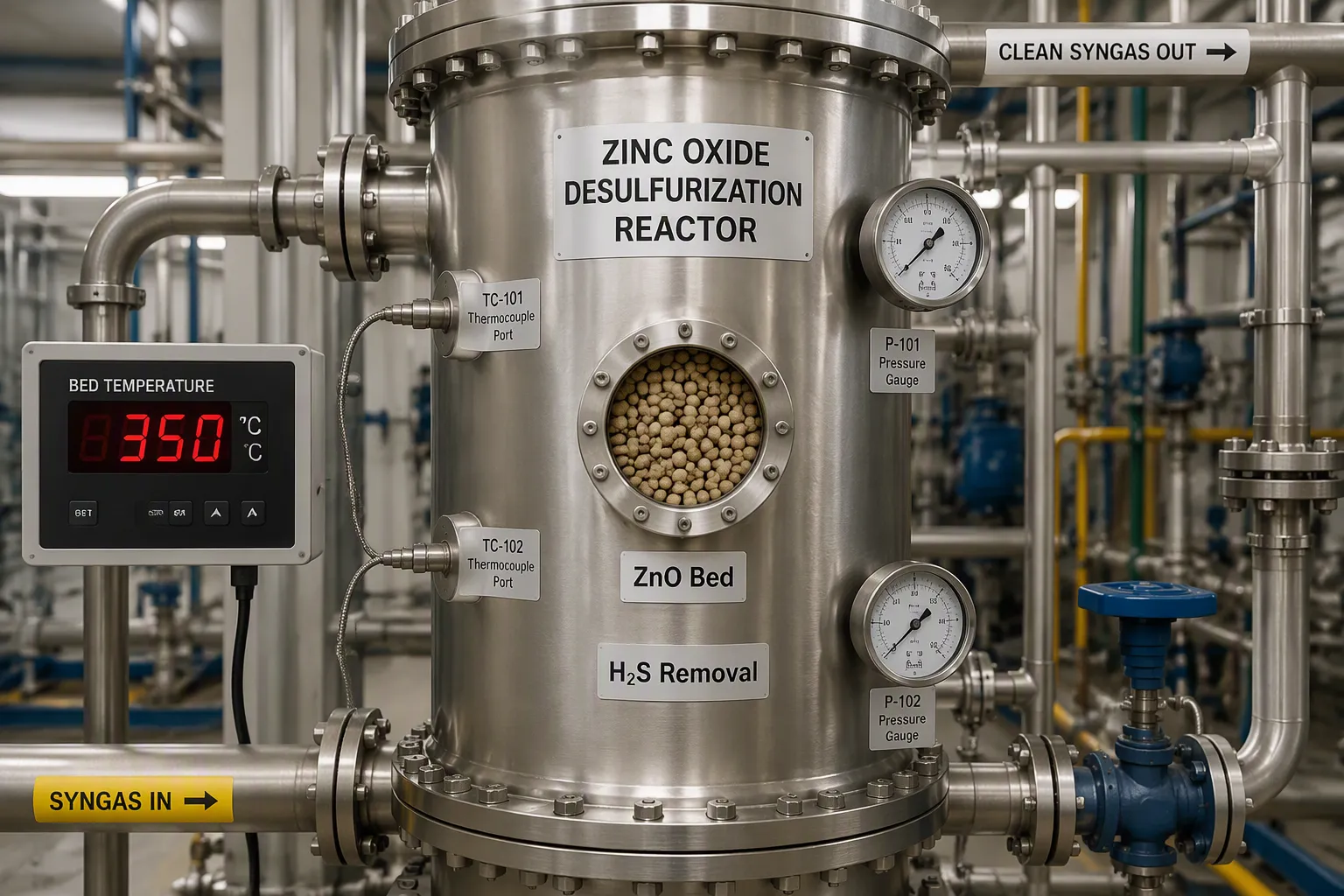
Desulfurization serves as the final guard polishing step in any syngas train. This stage prevents sulfur poisoning of reforming, shift, and methanation catalysts. Zinc oxide is an effective adsorbent for removing hydrogen sulfide. Hydrogen sulfide must be removed to prevent downstream catalyst poisoning and equipment corrosion. Three factors determine how well a zinc oxide desulfurizer performs. These factors are operating temperature, pressure and space velocity, and desulfurizer selection with bed design. Each one influences sulfur removal efficiency and bed life.
Operating Temperature
Optimal range: 300–400°C
Temperature drives the desulfurization reaction. The optimal range for ZnO beds is 300–400°C. Within this window, H2S reacts rapidly with zinc oxide to form zinc sulfide and water. The reaction proceeds nearly to completion. Higher temperatures within this range increase reaction kinetics. The bed captures H2S more efficiently. Operators should maintain consistent temperature across the entire bed. Temperature gradients create zones of uneven H2S uptake. These zones reduce overall bed capacity.
Consequences of low temperature
Low temperatures slow the desulfurization reaction. Below 300°C, H2S capture becomes inefficient. The equilibrium constant still favors zinc sulfide formation. Reaction kinetics become the limiting factor. Sulfur slips past the bed. Downstream catalysts face poisoning risk. Low temperatures also reduce the bed's working capacity. The ZnO material saturates faster. Operators must replace the bed sooner than expected. This outcome increases operating costs and creates unplanned downtime. Maintaining temperature above 300°C protects both catalyst life and production continuity.
Pressure and Space Velocity
Effect of pressure on adsorption equilibrium
Pressure has minimal negative effect on H2S adsorption. Higher pressure actually favors H2S capture. The equilibrium shifts toward zinc sulfide formation. This behavior benefits high-pressure syngas processes. Methanol synthesis and ammonia production operate at elevated pressures. The ZnO bed performs well under these conditions. Pressure drops across the bed require monitoring. Excessive pressure drop signals bed fouling or channeling. Both conditions reduce desulfurization effectiveness.
Space velocity targets for contact time
Space velocity determines contact time between H2S and ZnO. Lower space velocity provides longer contact time. Longer contact improves H2S uptake. The bed captures more sulfur before breakthrough. Higher space velocity reduces contact time. Some H2S molecules pass through without reacting. Operators must balance space velocity against production rates. The target depends on inlet H2S concentration and bed volume. A conservative approach extends bed life and protects downstream catalysts.
Desulfurizer Selection and Bed Design
Particle size, surface area, and pore structure
Particle size affects pressure drop and reaction kinetics. Smaller particles offer more surface area, which improves H2S capture, but they also increase pressure drop. This trade-off requires careful evaluation. Surface area and pore structure determine capacity. High surface area provides more active sites for H2S adsorption, while an optimal pore structure allows H2S molecules to reach interior sites. This is where Xinye Catalyst's Zinc Oxide Desulfurizer excels. Our proprietary formulation features a highly developed mesoporous structure and high crush strength, ensuring maximum sulfur capacity while maintaining a low pressure drop even in high-space-velocity syngas trains. Poor pore structure limits access to active material, resulting in premature breakthrough and wasted capacity.
Single bed vs. lead-lag arrangement
Bed configuration affects operational flexibility. A single bed offers simplicity. It requires shutdown for replacement when saturated. A lead-lag arrangement uses two beds in series. The lead bed captures most H2S. The lag bed polishes any remaining sulfur. When the lead bed saturates, operators switch it to lag position. Fresh ZnO fills the lead position. This configuration maintains continuous desulfurization. It also extends overall bed life. Lead-lag systems reduce downtime and protect downstream catalysts consistently.
The following table summarizes key operating parameters:
Parameter | Target Range | Impact |
|---|---|---|
Temperature | 300–400°C | Reaction kinetics and capacity |
Pressure | Process-dependent | Minimal negative effect on equilibrium |
Space velocity | Low to moderate | Contact time and H2S uptake |
Particle size | Balanced | Pressure drop vs. surface area |
Operators should monitor these parameters continuously. Small deviations compound over time. Consistent operation protects catalyst life and maintains syngas quality.
Optimize Your Syngas Desulfurization Process
Are you experiencing premature sulfur breakthrough or high pressure drops? Download the Xinye Catalyst Zinc Oxide Desulfurizer Technical Data Sheet (TDS) to compare our sulfur capacity, crush strength, and operating windows with your current media.
Download TDS & Request a Free SampleOperation and Maintenance Best Practices
Monitoring Sulfur Breakthrough
Online analyzers vs. periodic sampling
Continuous monitoring protects the desulfurization bed. Online analyzers measure H2S levels in real time. They detect sulfur breakthrough within minutes. Periodic sampling provides a backup verification method. Laboratories analyze grab samples for H2S and total sulfur. Online instruments carry higher capital costs. Periodic sampling costs less but delays detection. Many plants combine both approaches. Online analyzers handle daily control. Periodic sampling validates analyzer readings. This dual strategy strengthens desulfurization reliability.
Setting alarm thresholds
Alarm thresholds define safe operating limits. The outlet H2S target sits below 0.1 ppmv. A warning alarm should trigger well before this limit. A high alarm demands immediate operator response. Thresholds must account for analyzer response time. They must also reflect downstream catalyst sensitivity. Operators should review alarm setpoints regularly. Feed changes and bed aging shift acceptable limits. Tight thresholds catch problems early. They also prevent unnecessary shutdowns.
Bed Replacement Management
End-of-life indicators: increased slip, pressure drop
Several signals indicate a spent ZnO bed. High sulfur slip in outlet gas triggers replacement when temperature and distribution checks fail. A sudden pressure drop increase points to dust, oil, or bed compaction. This condition requires inspection and potential bed replacement when contamination is severe. Operators should track these indicators together:
High sulfur slip in outlet gas (spent ZnO bed) → triggers bed replacement if temperature and distribution checks fail.
Sudden pressure drop increase (dust, oil, bed compaction) → triggers inspection and potential bed replacement if contamination is severe.
Safe handling and disposal of spent ZnO
Spent ZnO contains zinc sulfide and requires careful handling. Workers should wear protective equipment during removal. The material may release H2S when exposed to moisture or acid. Spent bed material must go to approved disposal facilities. Some plants recover zinc through specialized recycling. Documentation should track every bed changeout. Proper records support future desulfurization planning.
Optimizing Process Conditions
Avoiding temperature excursions and steam surges
Temperature stability protects desulfurization performance. Excursions above 400°C can sinter the ZnO bed. Sintering reduces surface area and H2S capacity. Steam surges dilute the feed and cool the bed. Cool zones allow H2S to slip through unreacted. Operators should monitor inlet temperature continuously. Control systems must respond quickly to upsets. Stable conditions extend bed life and maintain sulfur removal.
Controlling feed gas composition
Feed composition directly affects desulfurization duty. Higher H2S loads consume bed capacity faster. Organic sulfur species require conversion before capture. Chlorides poison ZnO and reduce its effectiveness. Operators should track feed sulfur content daily. Pretreatment steps remove heavy contaminants upstream. Consistent feed quality supports predictable bed life. It also protects every downstream catalyst in the syngas train.
Troubleshooting Desulfurization Issues
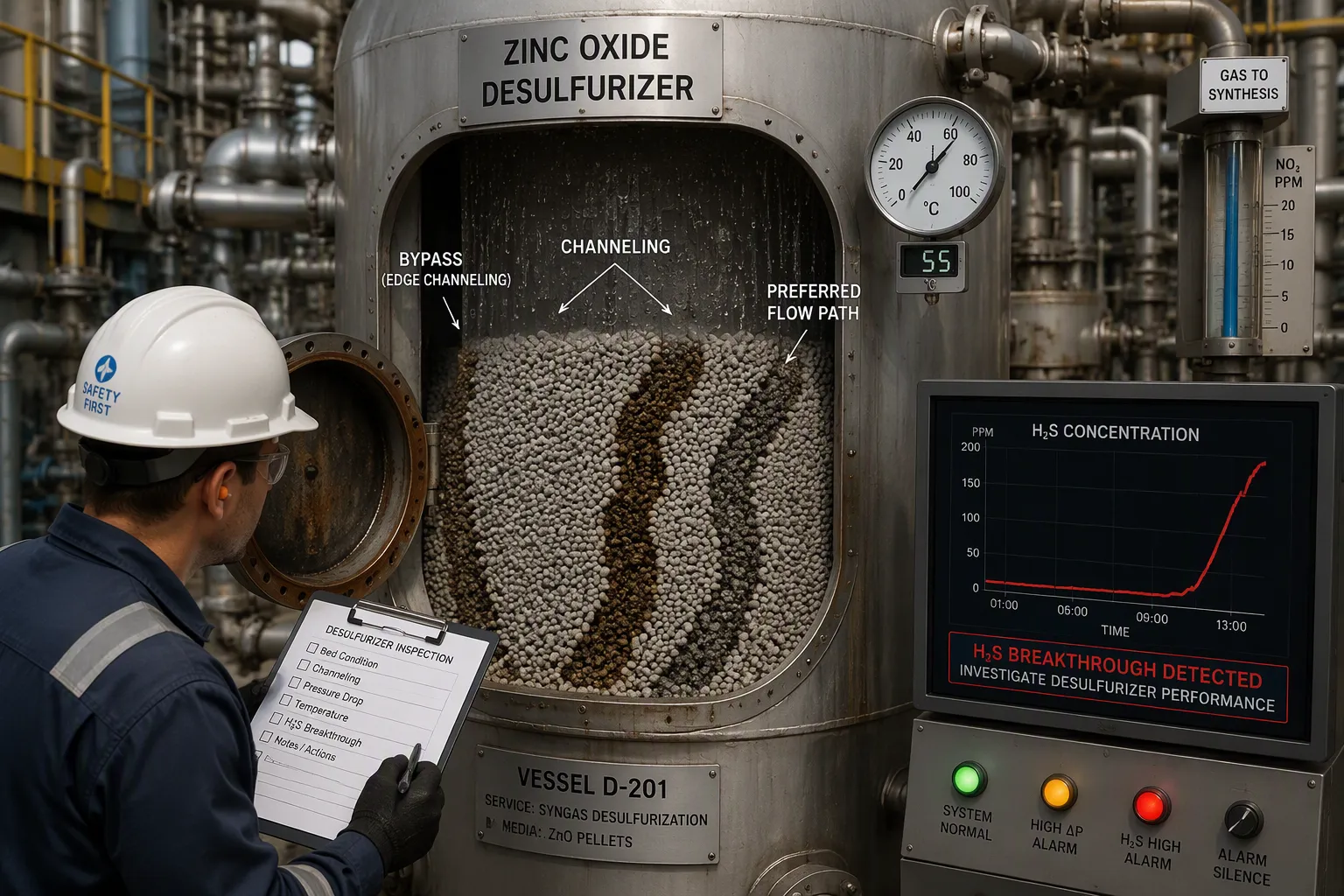
Even well-designed desulfurization systems encounter problems. Operators must recognize common failures and respond quickly. Three issues dominate plant experience: premature sulfur breakthrough, excessive pressure drop, and inconsistent sulfur removal. Each issue has distinct causes and corrective actions.
Premature Sulfur Breakthrough
Causes: channeling, bypass, insufficient bed depth, and moisture ingress
Sulfur breakthrough occurs before the bed reaches full capacity. Channeling creates this problem. Gas flows through paths of least resistance, avoiding large portions of the zinc oxide desulfurizer. Bypass around the bed edges produces the same result. Insufficient bed depth reduces contact time, allowing H2S molecules to pass through unreacted. The H2S concentration in the outlet gas rises sharply during breakthrough events.
Moisture ingress and water condensation inside the bed severely accelerate physical degradation. If liquid water contacts the hot ZnO bed (e.g., during startup or shutdown when temperatures fall below the dew point), it causes severe thermal shock. This leads to particle disintegration (fines generation) and pore blockage, drastically increasing the pressure drop and ruining the bed's structural integrity. Operators must recognize these root causes during desulfurization troubleshooting.
Corrective actions: bed redistribution, inlet flow distribution checks, and moisture control
To prevent water condensation, operators must ensure the inlet gas temperature is always maintained well above the dew point during all operational phases. Bed redistribution corrects channeling and bypass. Operators must inspect the bed surface after each shutdown, as uneven settling indicates poor distribution. Inlet flow distribution checks identify maldistribution issues. Proper loading procedures and using high-crush-strength desulfurizers prevent bypass and physical breakdown at the bed edges. Desulfurization reliability depends heavily on these corrective actions.
Excessive Pressure Drop
Causes: fines generation, carbon deposition, liquid carryover
Pressure drop across the bed signals trouble. Fines generation increases resistance. ZnO particles break down from thermal stress or mechanical vibration. Carbon deposition blocks pore openings. Liquid carryover wets the bed material. Wet particles agglomerate and restrict gas flow. The syngas train loses throughput as back pressure rises. Catalyst protection becomes secondary to maintaining production rates.
Mitigation: pre-filtration, temperature control, bed skimming
Pre-filtration removes fines and liquid droplets upstream. A knockout drum or coalescing filter protects the bed. Temperature control prevents thermal degradation. Operating within the optimal range maintains ZnO particle integrity. Bed skimming removes the top layer of contaminated material. This restores flow without replacing the entire bed. Regular pressure drop monitoring catches buildup early. This approach maintains H2S removal performance.
Inconsistent Sulfur Removal
Causes: variable feed sulfur load, halide poisoning of ZnO
Feed sulfur content varies with upstream operations. A spike in H2S concentration overwhelms the bed. H2S slip occurs unexpectedly. Halide poisoning reduces ZnO capacity permanently. Chlorides react with ZnO and form zinc chloride. This compound has no desulfurization activity. H2S passes through the poisoned section unabsorbed. H2S breakthrough experiments reveal the extent of capacity loss. These experiments help operators diagnose the problem accurately.
Solutions: feed pretreatment, dual guard bed configuration, real-time adjustments
Feed pretreatment stabilizes sulfur load. Hydrodesulfurization converts organic sulfur to H2S before the ZnO bed. A chloride guard bed upstream prevents halide poisoning. Dual guard bed configuration provides operational flexibility. The lead bed absorbs most sulfur. The lag bed polishes any remaining H2S. Operators switch beds when the lead saturates. Real-time adjustments respond to breakthrough events. Online H2S analyzers feed data to the control system. Operators adjust temperature or flow to maintain desulfurization targets. Consistent sulfur removal protects every downstream catalyst in the syngas train.
Integrating Desulfurization with Catalyst Protection
Upstream and Downstream Coordination
Feedstock selection and pretreatment
Feedstock quality determines desulfurization duty. High-sulfur feeds consume ZnO capacity faster. Operators should select feedstocks with lower sulfur content when possible. Pretreatment steps remove heavy contaminants before the guard bed. Hydrodesulfurization converts organic sulfur species into H2S. The ZnO bed then captures the resulting H2S efficiently. Chloride guard beds protect ZnO from halide poisoning. This layered approach stabilizes sulfur load. Stable feed quality extends bed life and protects downstream catalysts.
Interaction with shift converters and methanation catalysts
Shift converters and methanation catalysts are highly sensitive to sulfur. Even trace H2S levels poison their active sites. The ZnO guard bed must remove H2S to less than 0.1 ppmv. This protection ensures shift converters maintain activity. Methanation catalysts also require sulfur-free syngas. Any H2S slip causes permanent deactivation. Operators must coordinate desulfurization performance with downstream catalyst requirements. Consistent H2S removal protects every catalyst in the syngas train.
Data Logging and Improvement
Tracking sulfur load, bed life, and replacement frequency
Data logging supports continuous improvement. Operators should track inlet H2S concentration daily. Outlet H2S levels require the same attention. Bed life data reveals consumption patterns. Replacement frequency indicates whether operating conditions need adjustment. High replacement rates suggest excessive sulfur load or poor bed performance. Low replacement rates confirm effective desulfurization. This data guides maintenance scheduling and budget planning.
Using historical data to refine operating windows
Historical data reveals optimal operating windows. Temperature records show which ranges deliver best H2S uptake. Pressure data confirms equilibrium behavior. Space velocity trends indicate contact time adequacy. Operators can adjust conditions based on past performance. Small changes compound over time. Data-driven adjustments improve ZnO efficiency. They also extend bed life and reduce operating costs.
Training and SOPs
Operator training on early warning signs
Operators must recognize early warning signs. Rising outlet H2S levels signal bed exhaustion. Increased pressure drop indicates fouling or channeling. Temperature deviations suggest reaction problems. Training programs should cover these indicators. Operators need skills to respond quickly. Early intervention prevents H2S breakthrough. It also protects downstream catalysts from poisoning.
Documented procedures for emergency sulfur slip response
Emergency procedures must be documented and accessible. Sulfur slip events require immediate action. Operators should know how to isolate the affected bed. They must understand how to switch to backup capacity. Communication protocols ensure rapid response. Documentation should include contact information and escalation steps. Regular drills test procedure effectiveness. Prepared operators minimize production losses during H2S breakthrough events.
Preventing catalyst poisoning rests on three pillars. Correct zinc oxide desulfurizer selection captures H2S efficiently. Optimized operating conditions maximize H2S removal. Disciplined monitoring catches H2S breakthrough early. Prevention costs less than catalyst replacement or production losses. Implement the best practices and troubleshooting steps described. Reliable long-term syngas production depends on these actions. Continuous monitoring and data-driven optimization sustain catalyst protection. Syngas plants achieve performance through consistent H2S control. Hydrogen production requires H2S below safe thresholds. The desulfurizer captures H2S before catalysts. H2S must remain below 0.1 ppmv. H2S breakthrough signals bed exhaustion. H2S monitoring protects downstream catalysts. H2S control enables extended cycles. The future of catalyst protection involves continuous tracking and data-driven improvement.
FAQ
What outlet sulfur level protects downstream catalysts?
A zinc oxide desulfurizer reduces H2S to less than 0.1 ppmv. This level is more than sufficient to protect reforming, shift, and methanation catalysts. Target sulfur levels in natural gas must be reduced to 0.05–0.4 ppm to prevent catalyst poisoning. Operators should treat 0.1 ppmv as the upper safe limit.
Which temperature range delivers reliable sulfur removal?
The optimal range for ZnO beds is 300–400°C. Within this window, H2S reacts rapidly with zinc oxide to form zinc sulfide and water. Below 300°C, reaction kinetics slow down and H2S slips past the bed. Above 400°C, sintering reduces surface area and capacity.
How does pressure affect desulfurization performance?
Pressure has minimal negative effect on H2S adsorption. Higher pressure actually favors H2S capture because the equilibrium shifts toward zinc sulfide formation. This behavior benefits high-pressure processes such as methanol synthesis and ammonia production. Operators should still monitor pressure drop across the bed for fouling or channeling.
What causes premature sulfur breakthrough?
Channeling, bypass, and insufficient bed depth cause premature breakthrough. Moisture ingress and water condensation also accelerate the problem by causing thermal shock, which leads to particle disintegration (fines generation) and pore blockage. Maintaining the inlet gas temperature well above the dew point prevents condensation and preserves the bed's structural integrity.
How should operators handle a spent ZnO bed?
High sulfur slip in outlet gas signals a spent bed. A sudden pressure drop increase points to dust, oil, or bed compaction. Workers should wear protective equipment during removal because spent ZnO may release H2S when exposed to moisture or acid. Approved disposal facilities or zinc recycling programs handle the material.
Can chlorides damage the desulfurizer?
Yes. Chlorides poison ZnO permanently. They react with zinc oxide and form zinc chloride, which has no desulfurization activity. H2S passes through the poisoned section unabsorbed. A chloride guard bed upstream prevents halide poisoning. Feed pretreatment and dual guard bed configuration also stabilize performance.
What is the benefit of a lead-lag bed arrangement?
A lead-lag arrangement uses two beds in series. The lead bed captures most H2S. The lag bed polishes any remaining sulfur. When the lead bed saturates, operators switch it to lag position and fill the lead position with fresh ZnO. This configuration maintains continuous desulfurization and extends overall bed life.
How does desulfurization extend catalyst life in syngas plants?
A zinc-oxide guard bed removes the last traces of sulfur before methanol synthesis. In ICI and Lurgi processes, this protection contributes to a reported catalyst life of 3–5 years. Every sulfur molecule captured upstream prevents one potential poisoning event downstream. Prevention costs far less than catalyst replacement or production losses.